Cane Toad
Rhinella marina
 AI-generated
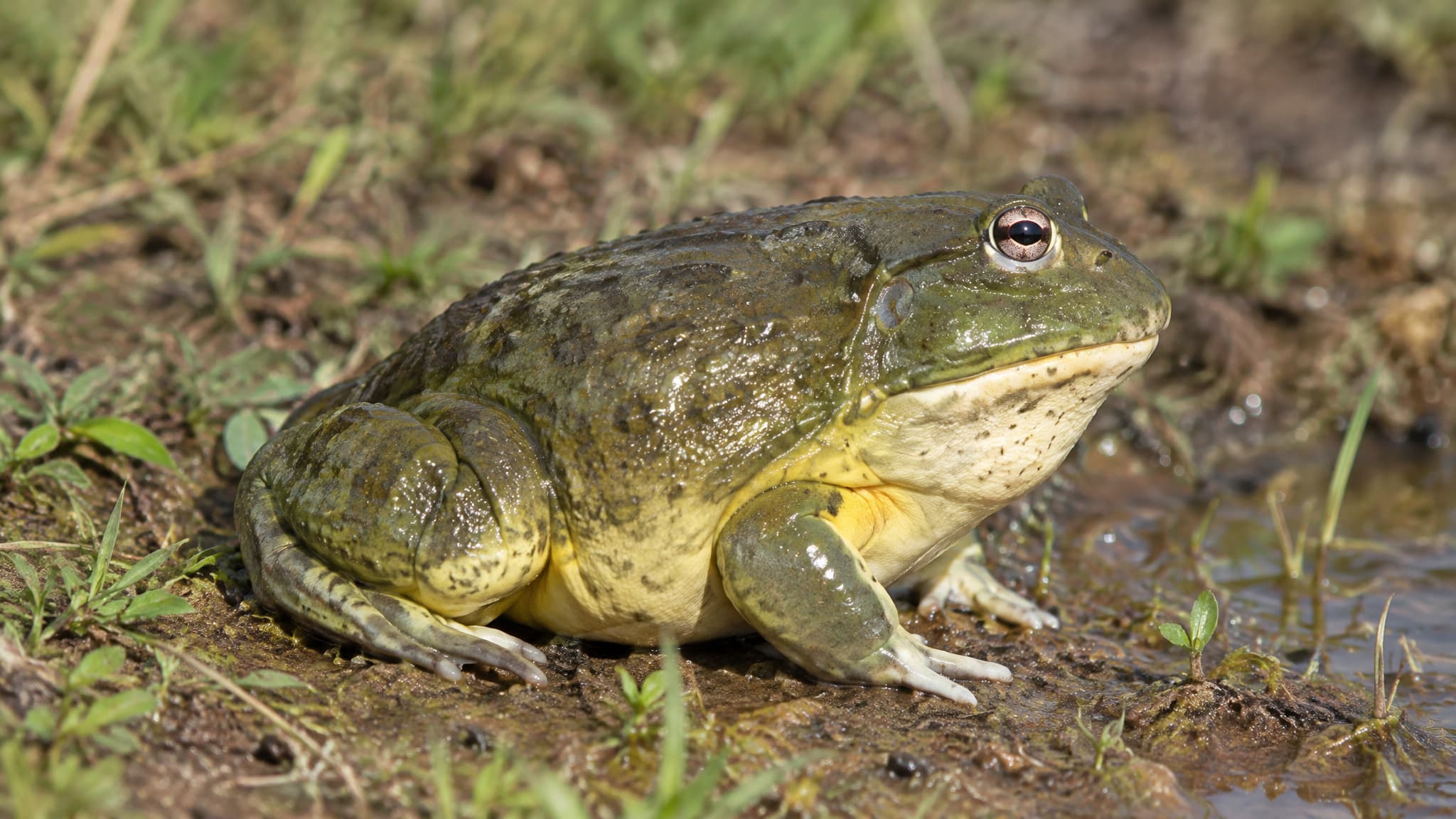
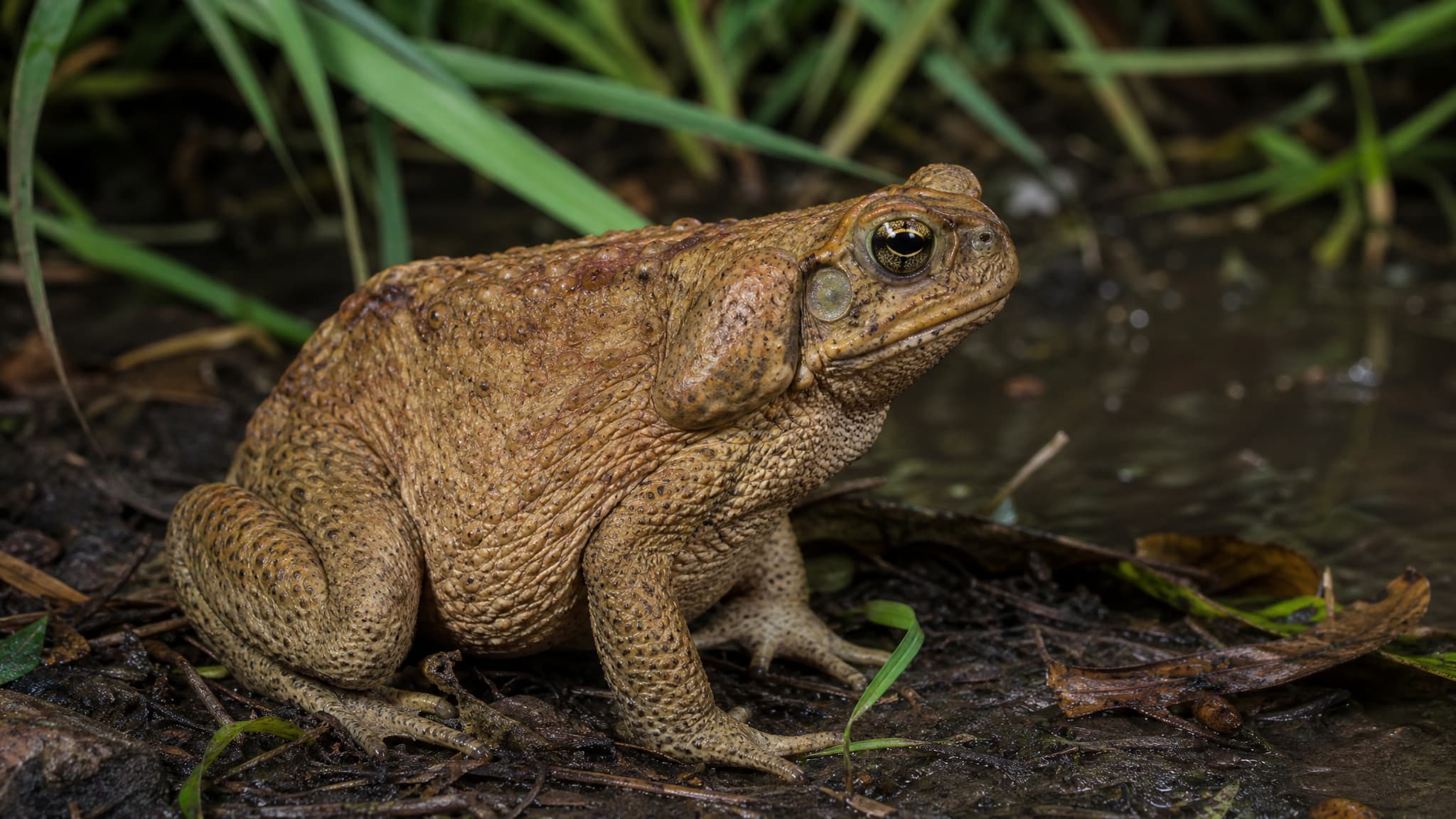
A large, heavily warty brown toad sits in a crouched posture on wet leaf litter beside shallow water, showing prominent parotoid glands and a golden-rimmed eye.
The cane toad, also called the marine toad, is a very large, terrestrial true toad with dry, warty skin. Its upper surface is usually olive-brown to yellow-brown, while the underside is pale and sometimes mottled. Broad bony ridges on the head, horizontal pupils, and a pair of conspicuous parotoid glands behind the eyes are important identifying features. Adults may reach about 24 cm in body length, with females commonly becoming larger than males.
Under current treatments, Rhinella marina is native east of the Andes in the Guianas and Amazonian South America, including Brazil, as well as adjacent parts of Bolivia, Colombia, Ecuador, Peru, Venezuela, and Trinidad and Tobago. It uses tropical forests, forest edges, grassland, disturbed land, gardens, and settlements, provided freshwater breeding sites are nearby. It has also been deliberately or accidentally introduced to many islands and countries, notably parts of the Caribbean, Pacific, Australia, and southern Florida.
Mostly active at night, this opportunistic predator eats ants, beetles, other arthropods, snails, and a wide range of other small animal matter; it may also scavenge or consume human-associated foods. In native ecosystems it is one predator among many and helps transfer energy from invertebrates to larger animals. Its parotoid glands release potent defensive secretions. Eggs, tadpoles, and adults can also be toxic, so dogs and other animals should not mouth or eat them.
Males call at still or slow-moving water, where females lay long strings containing many thousands of eggs. The small, dark tadpoles often gather in dense schools and metamorphose quickly when conditions are warm. Individuals can live for around a decade in the wild. The IUCN lists the species as Least Concern in its native range; however, where introduced, its toxin, high reproductive output, broad diet, and competition with native fauna can produce serious ecological impacts.