Royal Gramma
Gramma loreto
 AI-generated
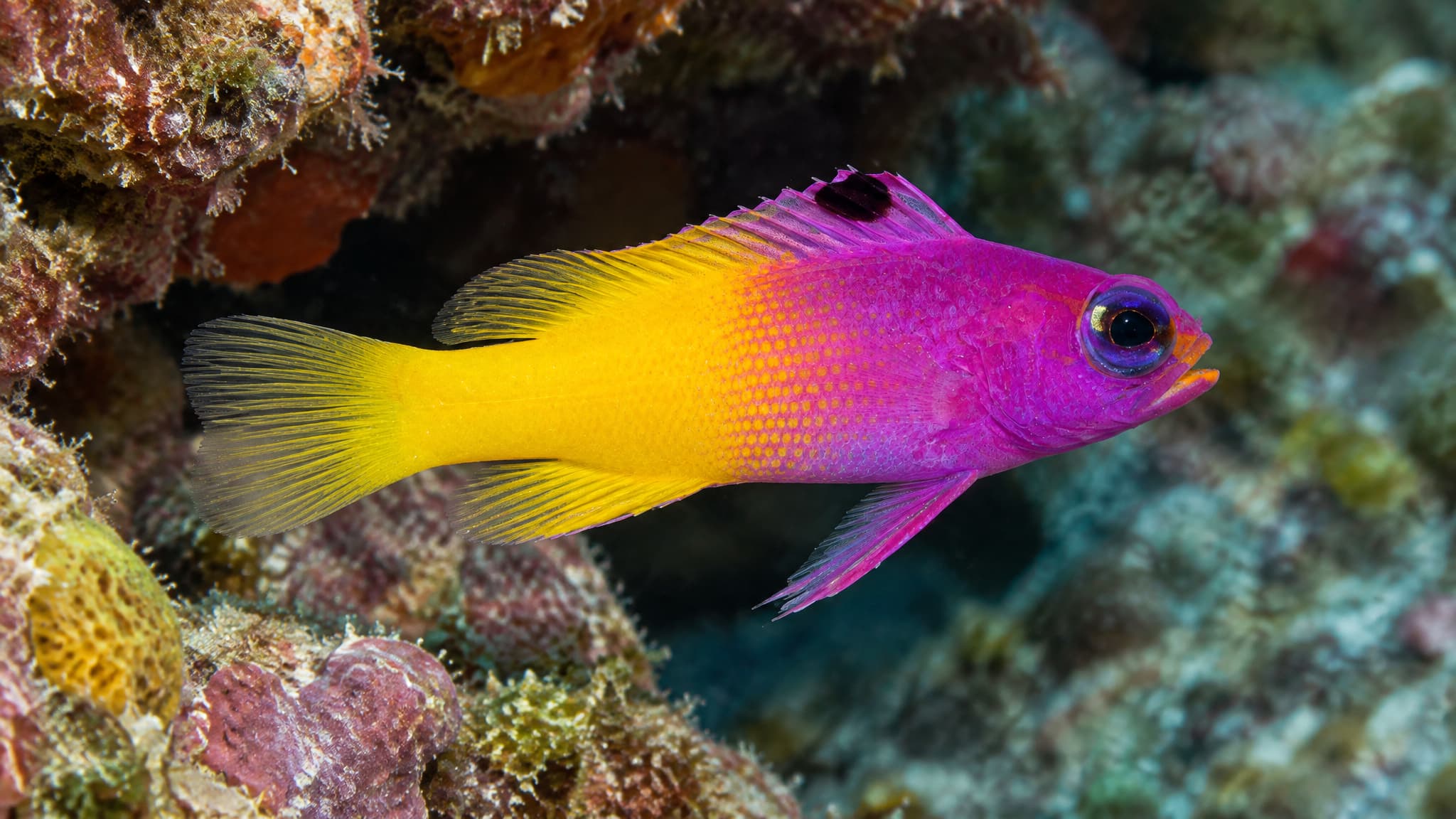
A Royal Gramma swims rightward in profile above a rocky coral reef, showing its vivid purple front, yellow rear, yellow fins, and dark spot on the dorsal fin.
The royal gramma (Gramma loreto), also called the fairy basslet, is a small, brightly coloured reef fish in the basslet family Grammatidae. It reaches about 8 cm in total length. It is easy to recognise by its two-tone colour: the front half of the body is vivid purple to violet, and the rear half and tail are bright yellow. A dark line runs through the eye, and there is a black spot at the front of the dorsal fin.
The species lives in the tropical western Atlantic, including Bermuda, the Bahamas, the Caribbean Sea and the coasts of Central America, south to northern South America. It is a reef-associated marine fish found from about 1 to 60 m deep, though usually shallower than 40 m. Royal grammas stay close to shelter. They gather around caves, crevices and the undersides of ledges on coral reefs.
The royal gramma is a carnivorous planktivore. It feeds mainly on zooplankton and small mobile crustaceans, and it sometimes acts as a cleaner by picking ectoparasites off other fishes. One unusual habit is that it orients its belly toward the nearest surface, so under overhangs it is often seen swimming upside down. It can be timid but also territorial, and it may threaten members of its own species and other small fishes with an open-mouthed display.
Its eggs are laid on the bottom, and its larvae drift in open water. Males prepare and guard nests in sheltered spots, often lined with bits of algae, where females lay their eggs. Public aquarium sources report a breeding season from about February to June. Lifespan in the wild is poorly documented. In aquariums, these fish commonly live around five years or more. The species has been bred successfully in captivity.
On the reef, the royal gramma eats plankton and small invertebrates, and in turn it is prey for larger predatory fishes. Its parasite-picking behaviour may also help other reef fishes stay healthy. It is one of the most popular fishes in the marine aquarium trade.
The IUCN Red List assesses it as Least Concern because it is widespread and common. Collection for the aquarium trade and the wider decline of Caribbean coral reefs are potential local pressures, but captive breeding helps reduce demand for wild-caught fish.