Snouted Treefrog
Scinax fuscovarius
 AI-generated
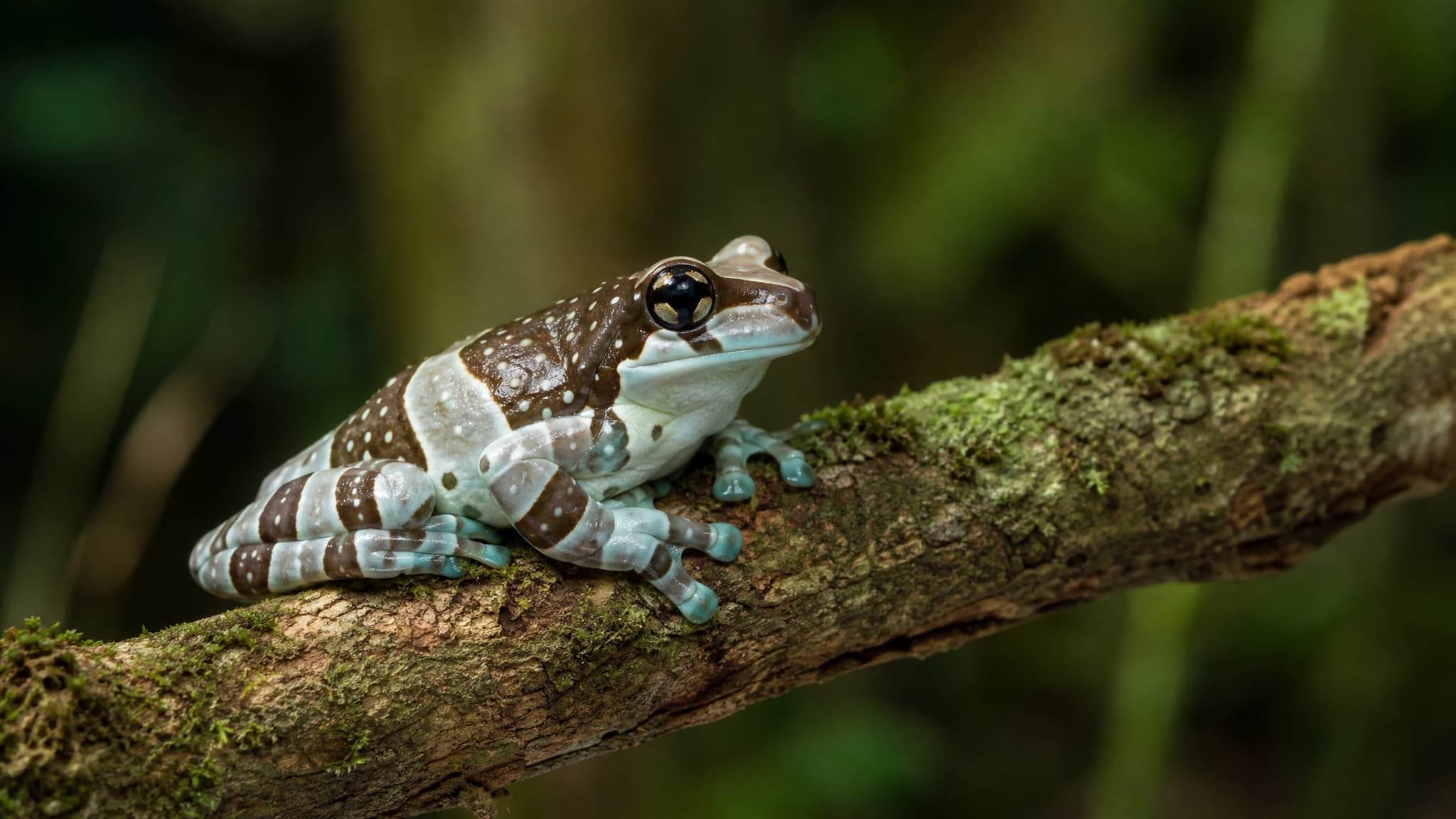
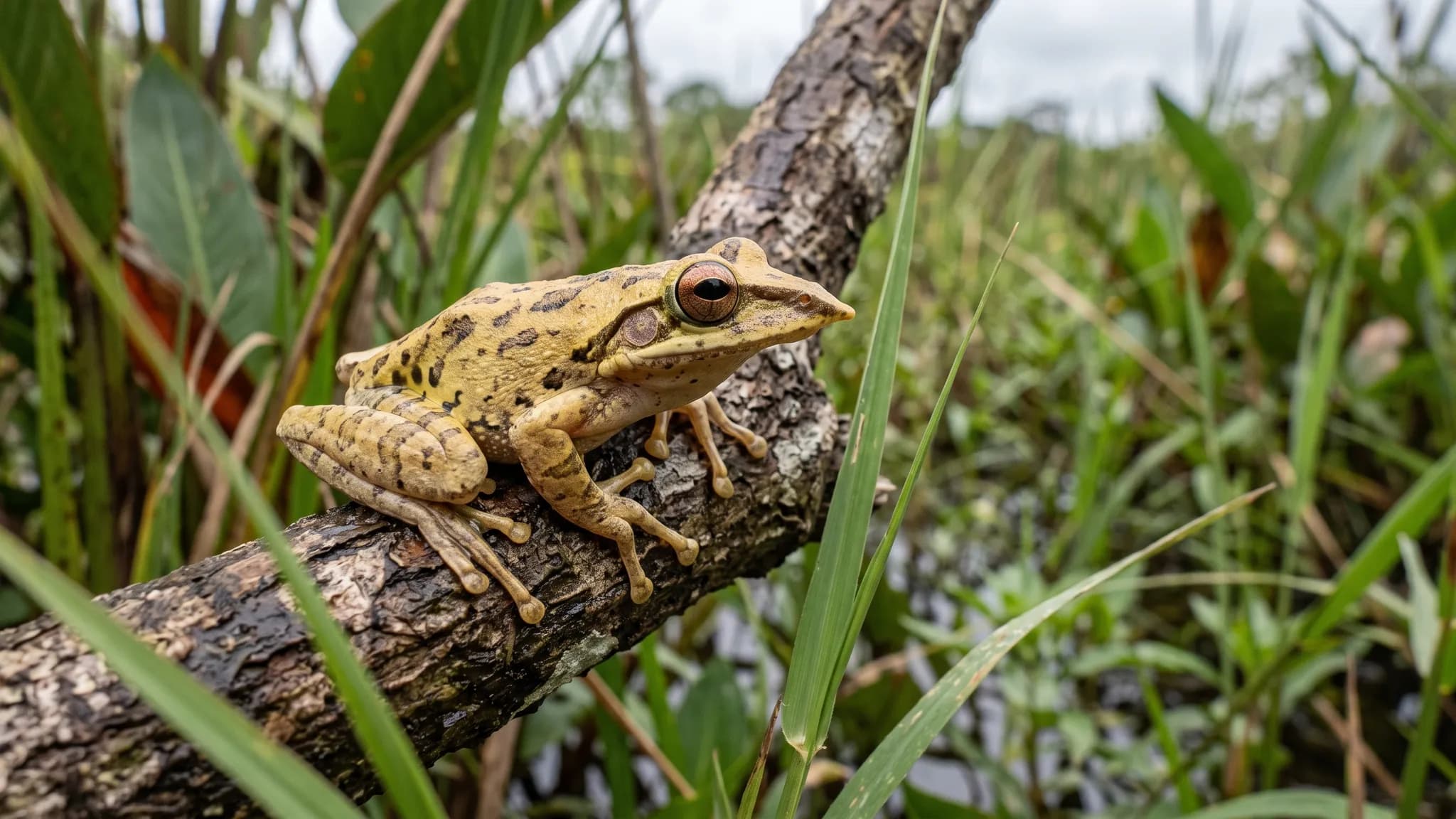
A Snouted Treefrog resting on a branch in a marshy environment.
Scinax fuscovarius, commonly known as the snouted treefrog or fuscous-blotched treefrog, is a species of amphibian in the family Hylidae. In Brazil, it is famously referred to as "perereca-de-banheiro" (bathroom treefrog) because it often seeks refuge in human plumbing fixtures, and "raspa-cuia" due to the unique, scraping sound of its mating call. Originally described in 1925 as Hyla fuscovaria by Adolfo Lutz, this highly adaptable frog has successfully integrated into both natural and human-altered environments across South America.
This medium-sized treefrog reaches a snout-vent length of up to 48 millimeters. It exhibits sexual dimorphism, with females typically growing larger and heavier than males. Its dorsal coloration is highly variable, ranging from dark or yellowish-brown to olive green or pale yellow, usually marked by irregular black or dark brown spots. Notably, the hidden areas of its limbs display distinct yellow and black patterns. A distinguishing morphological feature is its tympanum, which is noticeably larger than the adhesive discs on its fingers and toes.
Widely distributed throughout South America, Scinax fuscovarius is native to Argentina, Bolivia, Brazil, Paraguay, and Uruguay. It thrives in open environments such as moist savannas, subtropical or tropical shrublands, flooded grasslands, and freshwater marshes. Within Brazil, it is commonly encountered in the Atlantic Forest, Cerrado, and Pantanal biomes, though it generally avoids dense, deep forests. Its remarkable tolerance for degraded habitats allows it to flourish in pasturelands and urban settings, often taking shelter in cool, damp bathrooms or drains during the day.
As a nocturnal species, the adult frog emerges at night to actively forage for food, retreating to moist hiding spots when the sun rises. The species plays a complex ecological role, serving as both a predator and a host to a variety of parasites, including nematodes, trematodes, and mite larvae. Its tadpoles act as a vital energy link between aquatic and terrestrial ecosystems; they consume zooplankton, testate amoebae, rotifers, and ciliates, facilitating nutrient cycling in their freshwater habitats.
The reproductive cycle is closely tied to the warm season and periods of high rainfall, featuring a prolonged breeding period that can last up to seven months. Males actively seek mates by swimming along the edges of ponds and flooded fields, emitting their characteristic scraping calls from the water's surface. The species is highly prolific; females lay massive clutches ranging from 1,000 to over 4,800 eggs (averaging around 2,892), which hatch into aquatic larvae. Because of its vast geographic range, large population, and exceptional adaptability to anthropogenic environments, Scinax fuscovarius is listed as a species of "Least Concern" on the IUCN Red List of Threatened Species, facing no significant widespread threats.