Squat anemone shrimp
Thor amboinensis
 AI-generated
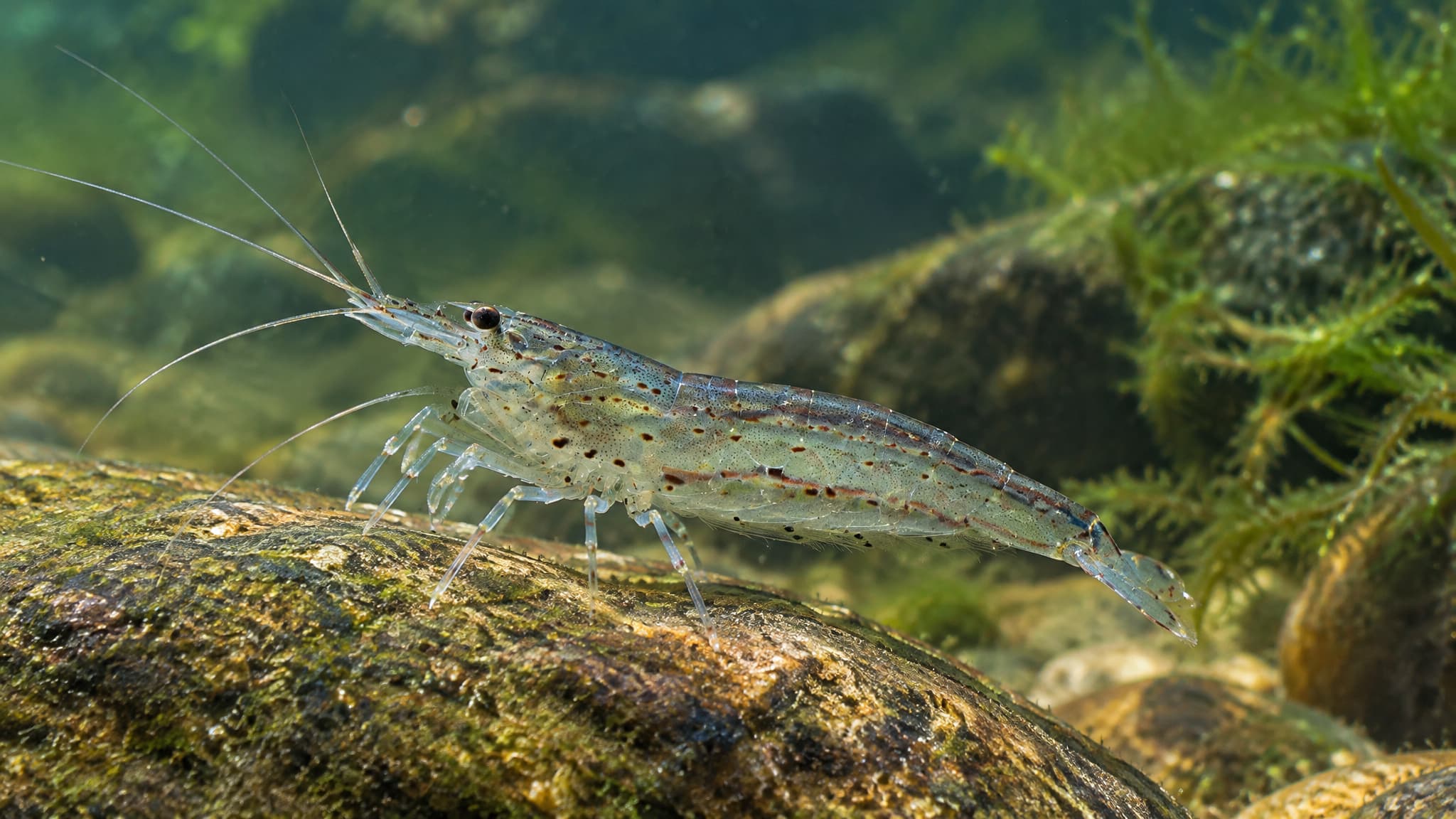
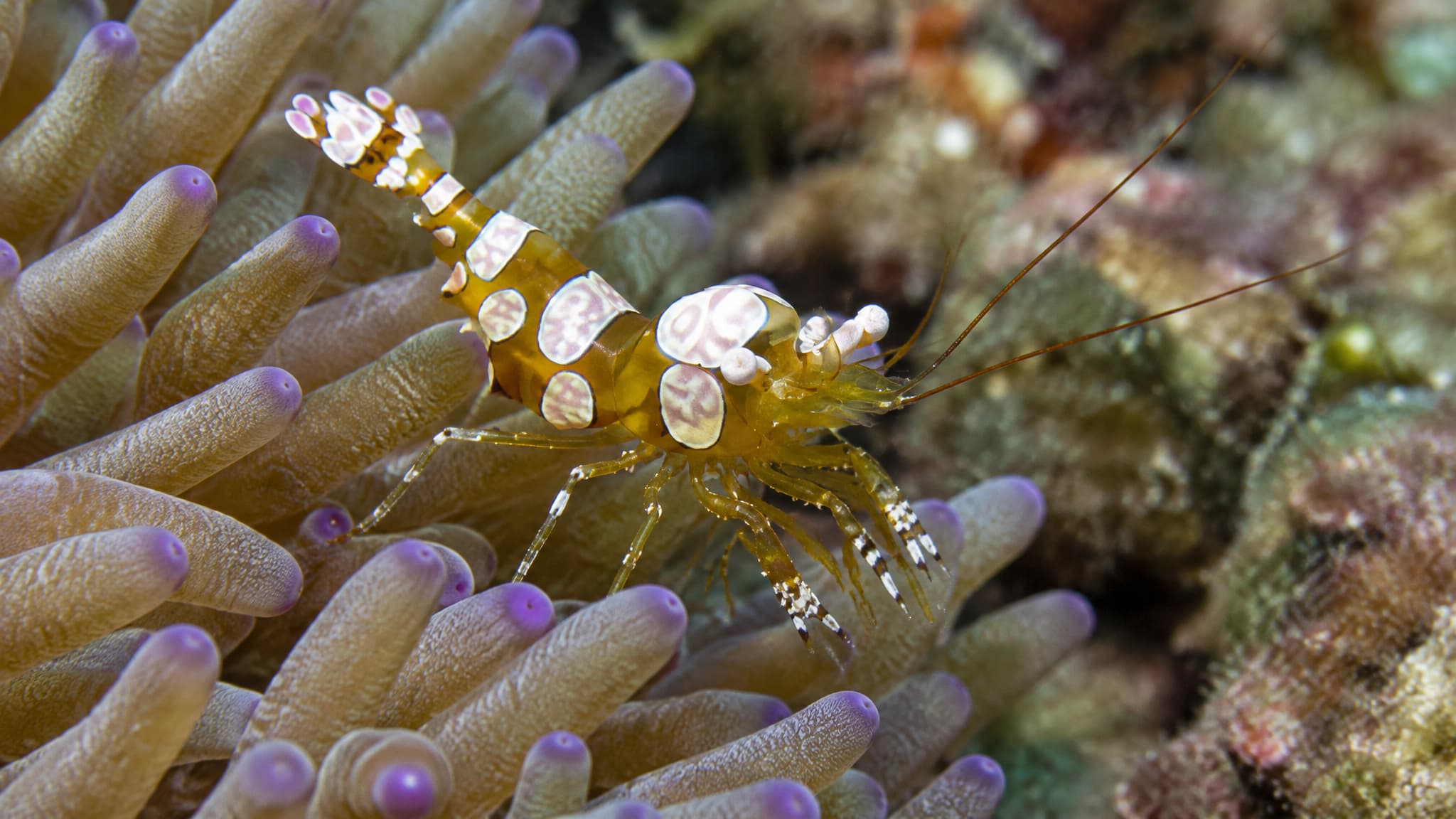
A squat anemone shrimp rests among the tentacles of a bulb-tipped sea anemone, shown in side view with long antennae, translucent legs, and prominent pale body spots.
The squat anemone shrimp, better known to divers and aquarists as the sexy shrimp, is a tiny caridean shrimp of the family Thoridae. It was first described by De Man in 1888 as Hippolyte amboinensis, and Thor discosomatis is now treated as a synonym. Adults reach only about 13 mm in length. The body is brownish with bold white patches, each outlined by a thin blue line, and the shrimp habitually holds its abdomen arched upward so that the tail fan sits above its head. It waves this raised abdomen from side to side, the swaying display behind both the "sexy" and "dancing" shrimp nicknames.
The species was long thought to live in warm seas worldwide. Consistent differences in colour pattern and genetic work showed that the name actually covers a complex of at least five cryptic or near-cryptic species, and in 2021 the western Atlantic populations were described as a separate species, Thor dicaprio. In its current sense, T. amboinensis is chiefly an Indo-West Pacific animal, photographed from the Red Sea and Oman to Australia, Indonesia, the Philippines, southern Japan, Hawaii and French Polynesia. Records from the eastern Pacific and the eastern Atlantic, such as Madeira and the Canary Islands, are still placed within the complex.
This is a benthic shrimp of tropical reefs and shallow coastal water. It has been recorded from the surface to about 60 m, and it is usually seen at 3 to 18 m. It lives as a commensal among the tentacles of a wide range of cnidarians, above all sea anemones but also mushroom corals and soft corals, and some individuals simply shelter in rock crevices with no host at all. Sponges and crinoids are used only rarely.
The shrimp feeds on its host, picking at tentacle tissue and at planktonic particles trapped in the host's mucus. Several individuals often share one host. Females carry their fertilised eggs under the abdomen until they hatch, and ovigerous females have been photographed beside large anemones in Japan and Australia. The larvae pass through several zoea stages in the plankton. Before settling they respond to chemical and visual cues that lead them to anemones, and they are generalists that accept more than one host species.
The squat anemone shrimp has not been evaluated for the IUCN Red List. Its small size, striking pattern and readiness to adopt an anemone make it a popular animal in the marine aquarium trade, where it is usually kept in small groups in reef tanks.