Tongue-eating Louse
Cymothoa exigua
 AI-generated
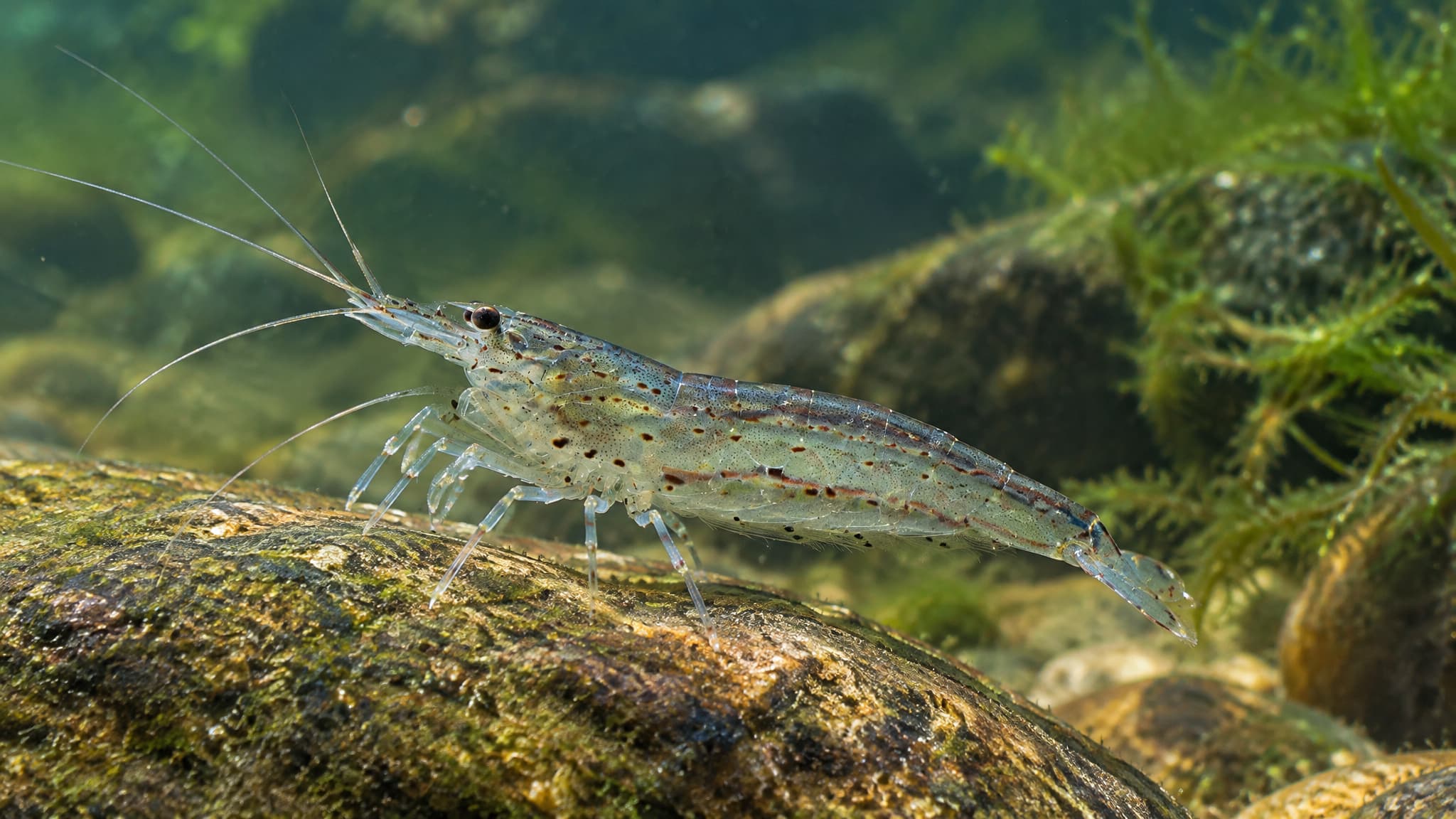
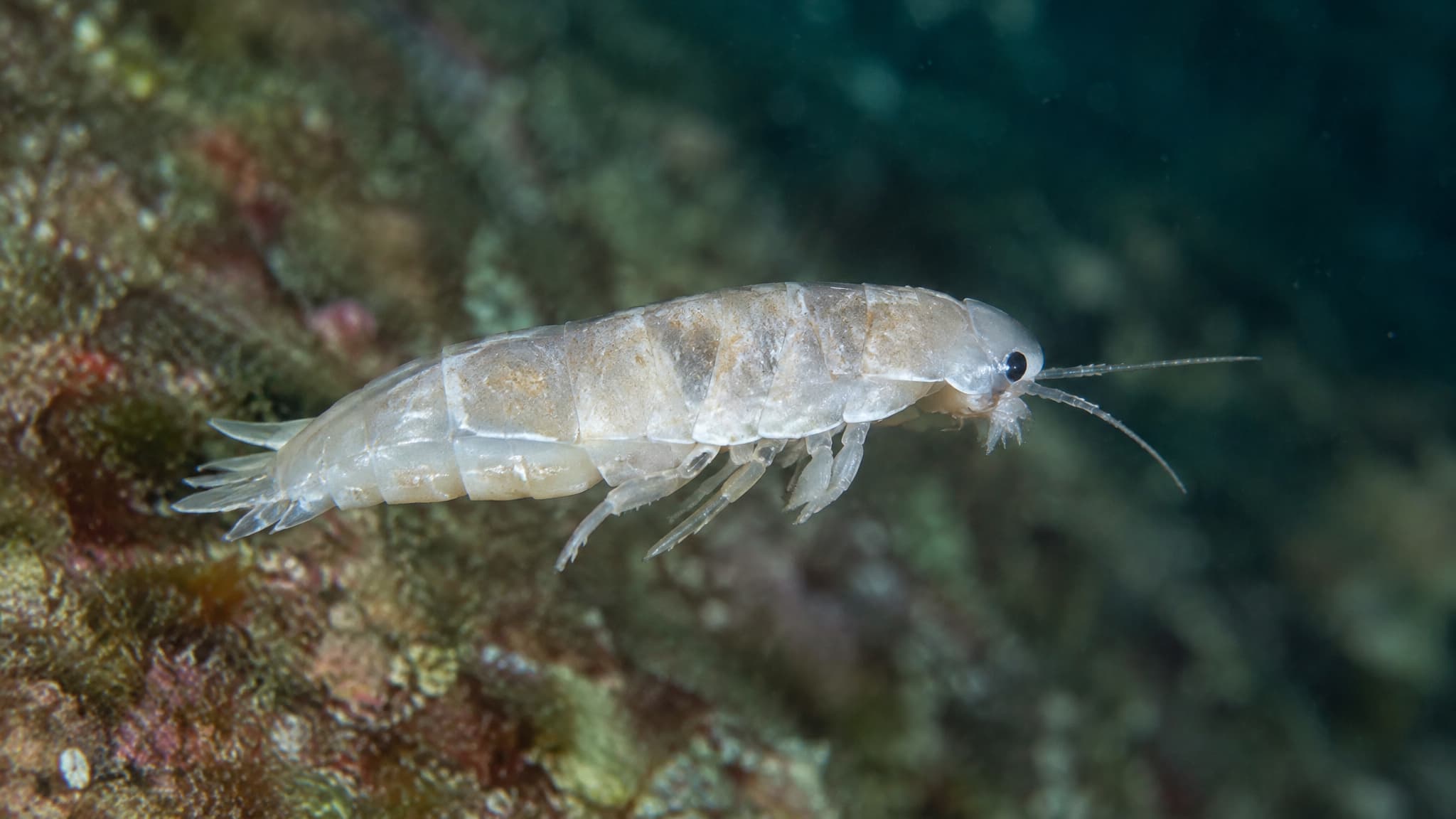
A pale, elongated marine isopod is shown in side view above a rocky underwater substrate, with a segmented body, long antennae, a prominent dark eye, numerous legs, and pointed rear appendages.
The tongue-eating louse (Cymothoa exigua) is a parasitic isopod, a crustacean in the family Cymothoidae, described by Schiødte and Meinert in 1884. It has a flattened, segmented body with seven pairs of sharp, hooked legs used to grip its host. Females are the larger sex, measuring about 8 to 29 mm long and 4 to 14 mm wide, while males reach roughly 7.5 to 15 mm long. Fully grown, it is often compared to the size of a cockroach.
The species lives in the coastal eastern Pacific, with records from the Gulf of California and Mexico's Pacific coast south to Ecuador, including the Galápagos Islands, where its type locality lies. It favors shallow seas, from about 2 to 60 m deep. Snappers of the genus Lutjanus are its most frequent hosts, and Costa Rican records added the Colorado snapper and Jordan's snapper; in all it is known from several fish species in a few families, including grunts and drums.
Its life history is famous for one unusual step. Free-swimming juveniles find a fish and enter through the gills, where they feed on blood. A female then moves into the mouth, clamps onto the tongue and feeds on its blood until the organ withers away. The parasite attaches to the remaining stub and works in place of the tongue, feeding on the host's blood and mucus. It is regarded as the only known parasite to functionally replace a host organ.
Individuals are protandrous hermaphrodites: all start as males, and a male can turn into a female, apparently when another male is present in the same host. Mating takes place inside the fish's mouth. The female carries her eggs, sometimes more than 400, in a brood pouch under her body, and the young stay there until they are ready to leave and find their own hosts. Reported lifespan is up to about three years, growing along with the host.
A host fish usually keeps eating and can use the parasite much like a tongue, although fish carrying two or more lice tend to be underweight. Because infested snappers reach markets, the louse can lower the value of the catch, and in 2005 one turned up in a snapper sold in a UK supermarket, identified by the Horniman Museum. It is not harmful to people, though it may bite if handled. It has not been evaluated by the IUCN.