Brazilian fiddler crab
Uca maracoani
 AI-generated
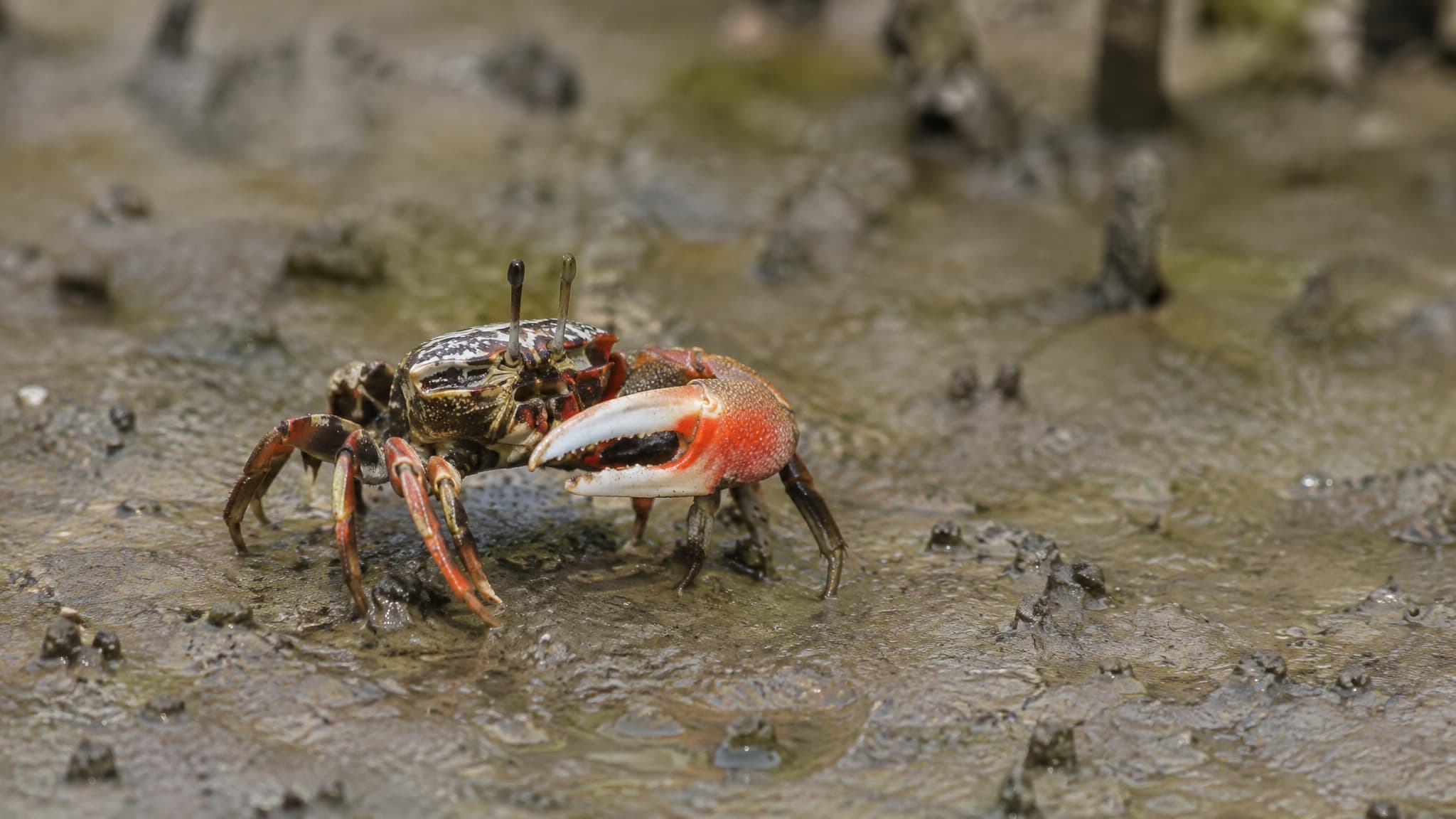
A Brazilian fiddler crab stands on wet, muddy ground with its eyestalks raised and one greatly enlarged orange-and-white claw held forward; several walking legs are visible.
Uca maracoani, the Brazilian fiddler crab, is a large, narrow-fronted fiddler crab of tropical and subtropical western Atlantic shores. Its granular carapace can approach 46 mm in width. As in other fiddler crabs, the sexes are conspicuously different: males have one extremely enlarged, broad, flattened claw, while females have two small feeding claws. The outsized male claw is used in visual displays and contests rather than routine feeding.
The species occurs in estuaries and mangrove-associated coastal wetlands from the Caribbean and northern South America south along Brazil. It is especially associated with sheltered, unvegetated or sparsely vegetated mudflats near river mouths, where soft silt, clay, or sandy mud retains abundant organic matter. It can also occur in estuaries lacking mangroves and generally favors moderately to highly saline sections of estuarine systems.
A deposit feeder, it processes surface sediment with its small feeding claw, extracting organic particles, microscopic algae, bacteria, and other microbial material. It lives in burrows in the intertidal mud, emerging chiefly at low tide to feed, interact, and reproduce. By digging and reworking sediment, it contributes to nutrient cycling and to the physical structure of mangrove and mudflat soils, while also forming part of estuarine food webs.
Females carry eggs beneath the abdomen; larvae are released on high spring tides and develop in the water column through zoeal stages before returning as megalopae to estuarine adult habitat. Recruitment can occur throughout the year, although timing varies among local populations. Its exact lifespan in the wild is not well established, but Brazilian assessments describe a short life cycle. Habitat conversion, dredging, marina construction, pollution, and contaminated sediments can cause local pressure. It is assessed as Least Concern in Brazil because of its broad distribution and continued occurrence in suitable habitat.