Atlantic mangrove ghost crab
Ucides cordatus
 AI-generated
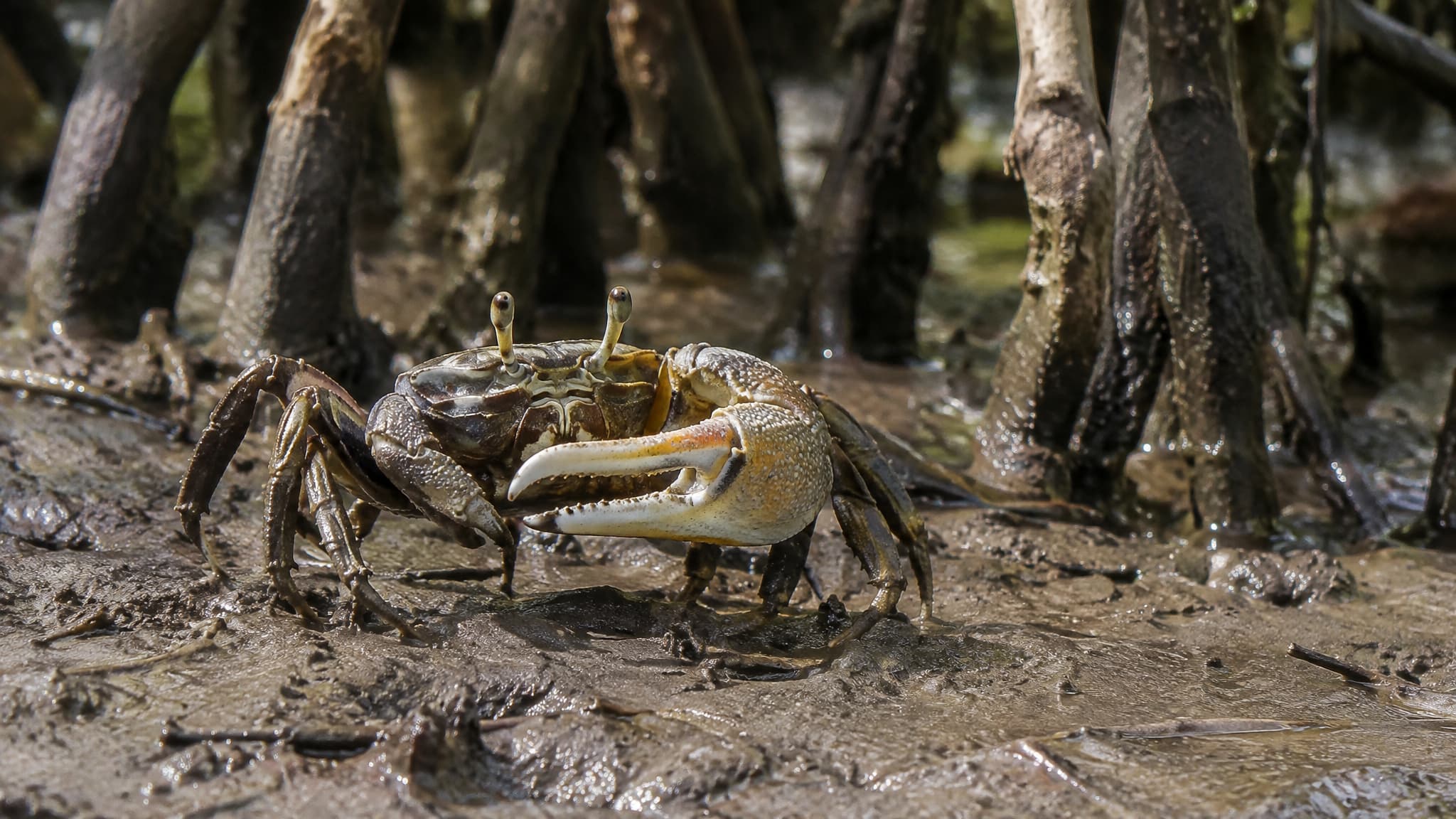
An Atlantic mangrove ghost crab stands on wet mud among mangrove roots, with raised eyestalks, a broad carapace, and one prominently enlarged pale claw.
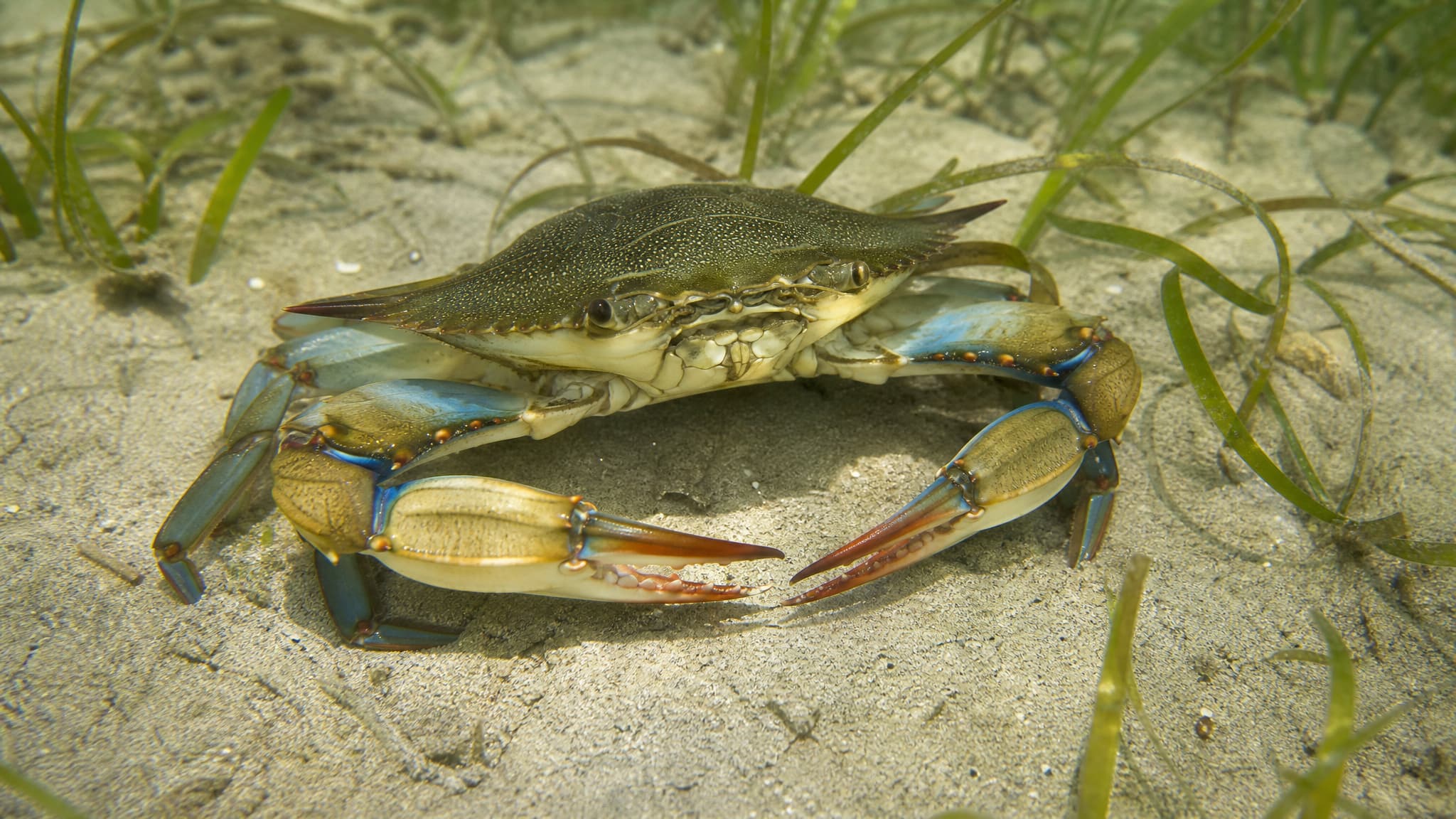
Ucides cordatus, the Atlantic mangrove ghost crab, is a large, robust true crab of tropical and subtropical western Atlantic mangroves. In Brazil it is widely known as the caranguejo-uçá. Its broad, strongly convex carapace is commonly bluish to grayish, often with yellow tones; the walking legs are long and hairy, and the claws are unequal, especially in adult males. Males can reach about 100 mm in carapace width.
It occurs from southern Florida through the Caribbean and northern South America to Santa Catarina, Brazil. This crab lives high in the intertidal zone of estuaries and mangrove forests, occupying deep mud burrows that can reach roughly 70 cm and connect with the water table. Burrows shelter it from drying, temperature extremes, and predators.
It feeds chiefly on fallen mangrove leaves, flowers, propagules, and detritus, while also ingesting sediment and occasionally small animal material. By carrying, eating, and storing leaf litter, and by digging extensive galleries, it helps recycle nutrients, oxygenate mangrove sediment, and influence the habitat available to other organisms.
Reproduction is seasonal. During mass reproductive movements known in Brazil as the andada, adults leave their burrows to mate; females later release larvae that develop in coastal waters before young crabs return toward estuaries. Individuals may live up to about 11 years and mature at roughly two to three years. It is an important fishery resource, but overharvest, mangrove loss, pollution, and disease threaten local stocks. The species is globally Not Evaluated by IUCN, while Brazil assesses it as Near Threatened.