Venus' flower basket
Euplectella aspergillum
 AI-generated
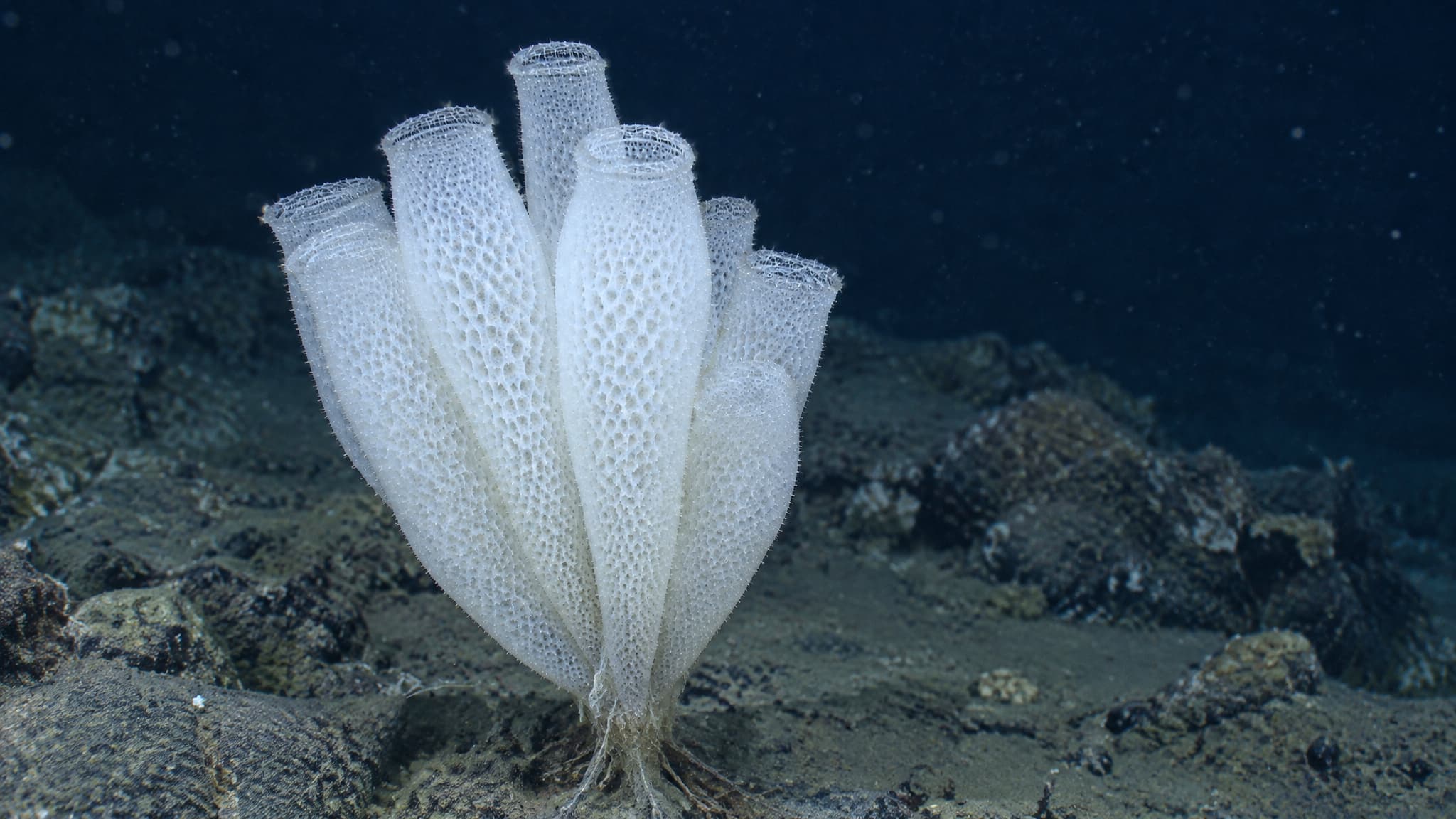
A Venus' flower basket stands upright on the seafloor, with several tall, open tubular oscula and a delicate white lattice-like skeleton. The dark-water setting and rocky substrate are clearly visible.
The Venus' flower basket (Euplectella aspergillum) is a deep-sea glass sponge with a curved, tube- or vase-shaped body. Its skeleton is made of silica: six-rayed spicules are fused into a delicate glass latticework that looks like woven lace. Most individuals are 10 to 30 cm tall, although the species ranges from 7.5 cm to 1.3 m. At the base, a tuft of long glass fibres, 5 to 20 cm long and about as thin as a human hair, anchors the sponge to the bottom.
The species lives in the western Pacific Ocean near the Philippine Islands, and its type specimen comes from the eastern Philippines. It is found at depths of 100 to 1,000 m and is most common below 500 m; one specimen has been photographed at 2,572 m. It spends its whole life attached to rocky seafloor, and its anchoring fibres also keep it rooted in loose, muddy sediment. The World Porifera Database recognizes four subspecies.
Like other sponges, it is sessile and feeds by filtering seawater. Water flows through its body, and the sponge captures plankton, other microscopic organisms, marine snow and organic debris. Flow simulations suggest that the lattice shape creates small vortices inside the sponge. Researchers have also speculated that light from bioluminescent organisms, carried along its glass fibres, may help attract prey, but this has not been confirmed.
Little is known about its reproduction. It is thought to be hermaphroditic, producing male and female gametes at different times. Sperm enter with the inhalant water current and fertilize the eggs, and the embryo develops into a free-swimming larva that settles and grows into a new sponge. The vortices created by the skeleton may help mix sperm and eggs. Its lifespan in the wild has not been measured.
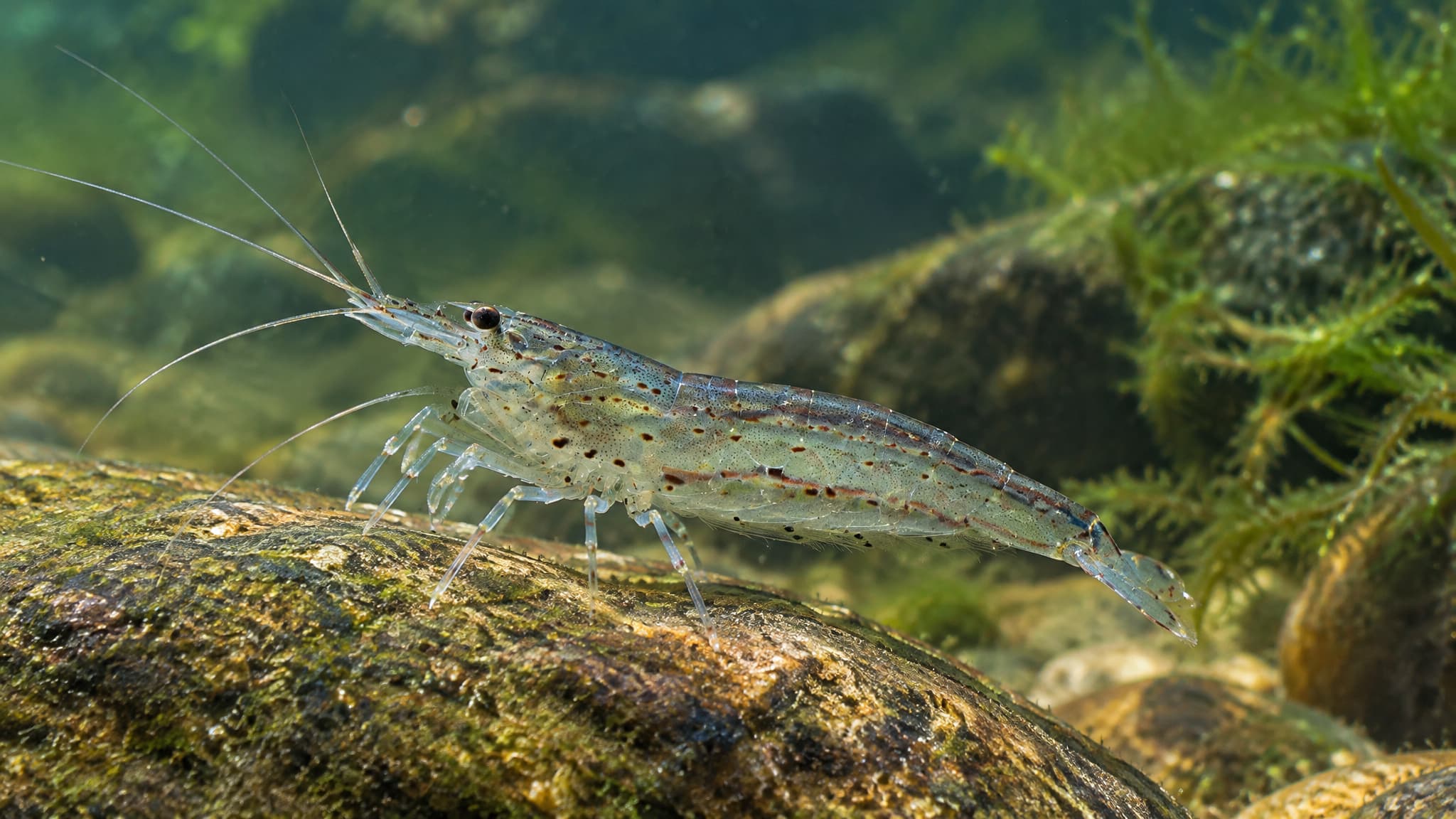
The sponge is best known for its partnership with glass sponge shrimp. A male and a female usually enter while young, grow too large to escape the lattice and spend their whole lives inside, where they feed on particles the sponge collects and help keep its interior clean. Their tiny offspring leave to find a sponge of their own. In Japan, the dried skeleton is given as a wedding gift, and its glass fibres and strong, light structure are studied by engineers and fibre optics researchers.
The species has not been evaluated by the IUCN Red List, and its population status is unknown because it lives at such great depths.