Whiteleg shrimp
Penaeus vannamei
 AI-generated
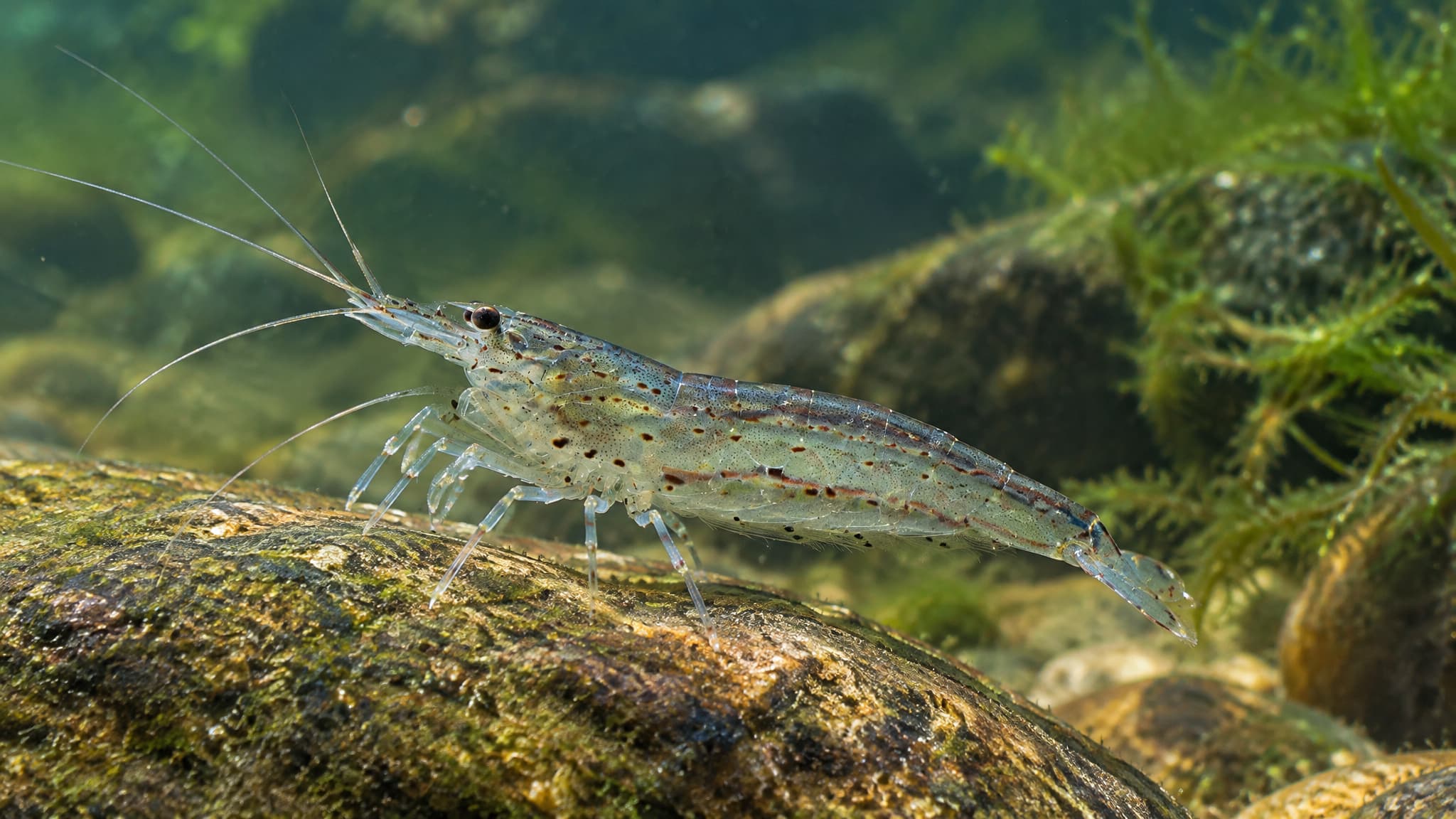
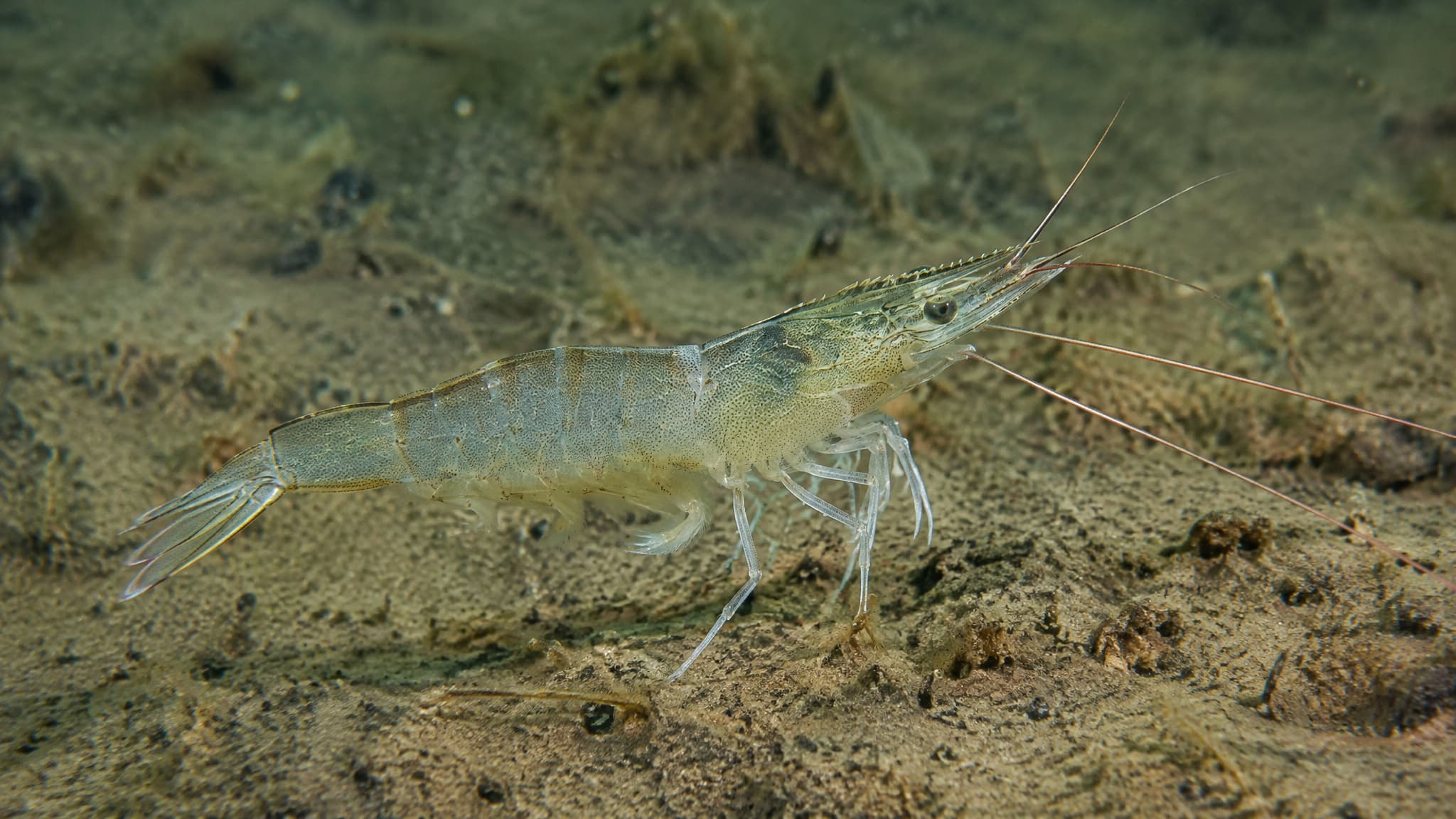
A whiteleg shrimp is shown in side profile facing right on a sandy, muddy seabed. Its translucent pale body, segmented abdomen, rostrum, long antennae, walking legs, and tail fan are clearly visible.
Whiteleg shrimp
The whiteleg shrimp is a penaeid shrimp of the eastern Pacific, also called the Pacific white shrimp. Its body is usually translucent whitish, though its tone can vary with the bottom, food, and water conditions. It has a moderately long, toothed rostrum—the forward-pointing projection of the carapace—and may reach about 23 cm in total length. Females commonly grow faster and become larger than males.
Its native range runs from Sonora, Mexico, south to northern Peru. Adults live on soft, muddy marine bottoms, while young shrimp use estuaries and other brackish coastal habitats; documented depth ranges extend from the shoreline to about 72 m. It is adapted to tropical and subtropical waters. Aquaculture and accidental or deliberate releases have extended its occurrence beyond that native eastern-Pacific range.
This is a bottom-associated, opportunistic feeder. Like other penaeid shrimps, it gathers organic material and small bottom-dwelling prey, linking detritus, benthic invertebrates, and higher consumers in coastal food webs. Juveniles in estuaries are important prey for fishes and other predators, while the shrimp itself helps process material on soft sediments.
Sexes are separate. After mating and spawning, development passes through six nauplius stages, three protozoeal stages, and three mysis stages before the post-larval phase. Wild animals may live about one to two years, whereas farmed shrimp are generally harvested much sooner. It is among the world’s most heavily cultivated shrimp species; disease management and the environmental effects of farming and escapes are therefore significant concerns. The species is currently listed as Not Evaluated on the IUCN Red List.