Yellow Tang
Zebrasoma flavescens
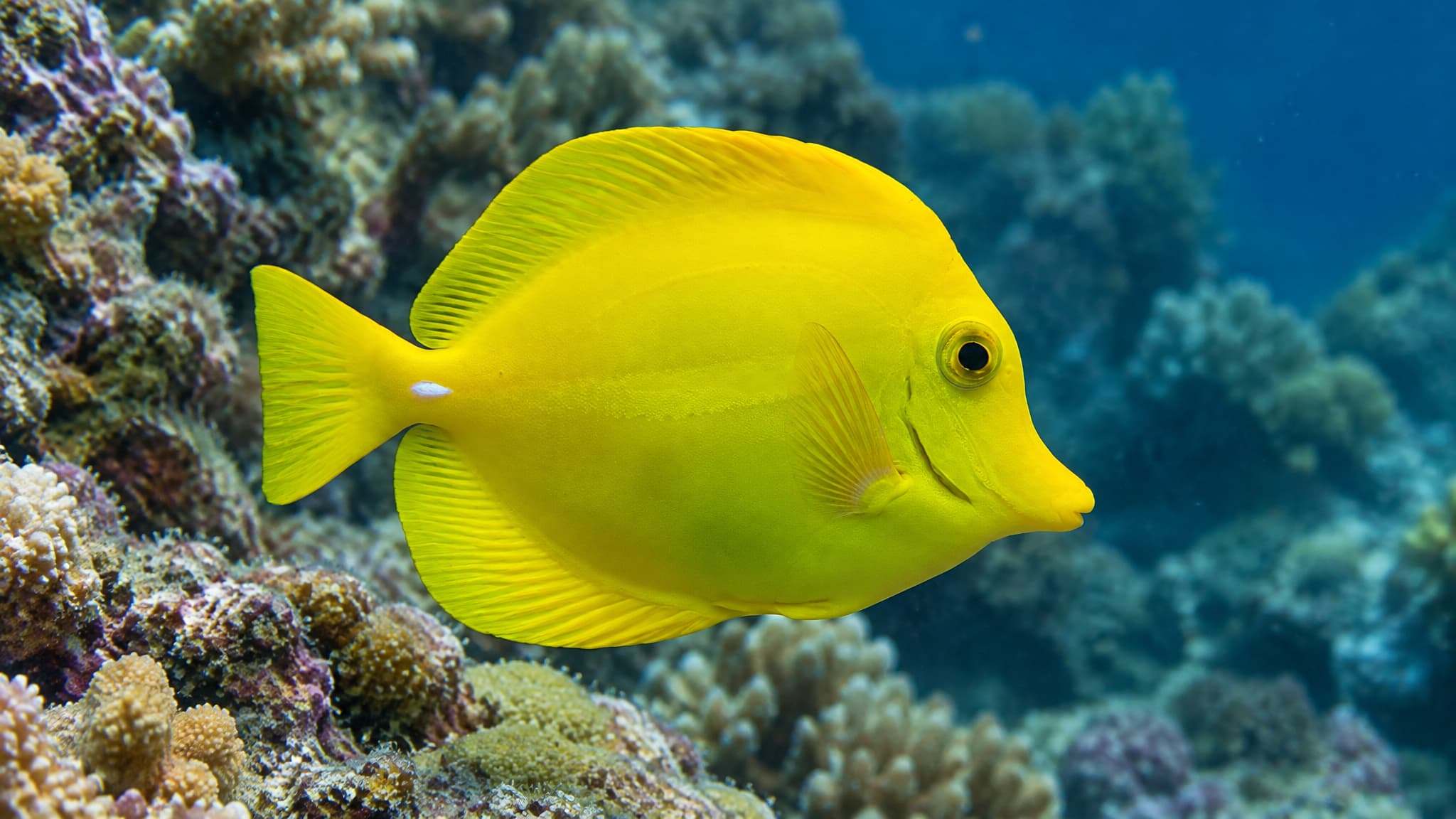 AI-generated
A Yellow Tang swims in profile above a coral reef, showing its vivid yellow, laterally compressed body, rounded fins, large eye, and white caudal-peduncle spine. 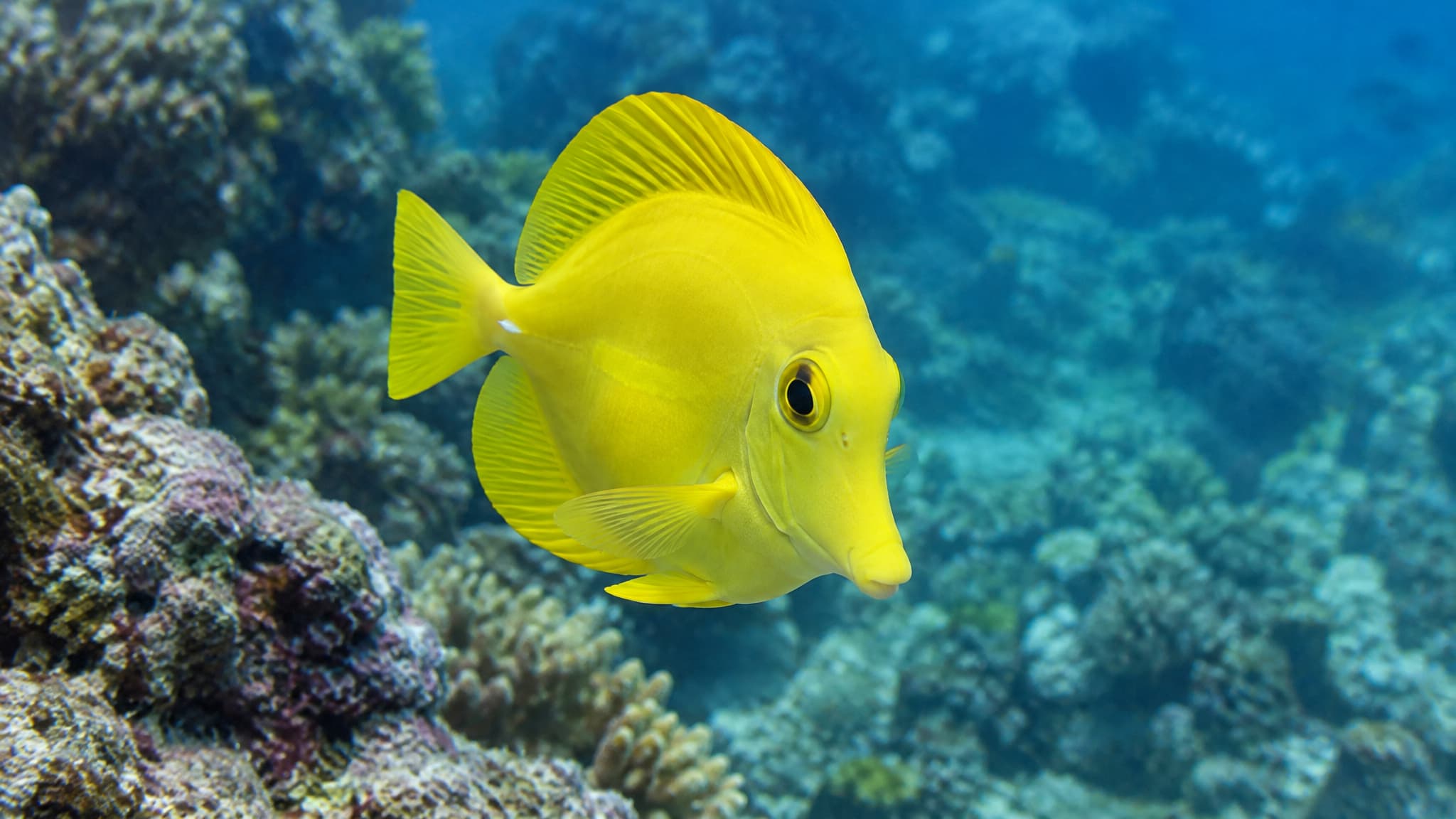 AI-generated
A bright yellow tang swims in a three-quarter side view above a coral reef, with its oval body, tall dorsal and anal fins, translucent pectoral fin, and yellow forked tail clearly visible.
The yellow tang (Zebrasoma flavescens) is a small surgeonfish in the family Acanthuridae, famous for its vivid lemon-yellow colour. Its body is tall, oval and strongly compressed, with high dorsal and anal fins and a pointed snout. A sharp, white, scalpel-like spine sits on each side of the tail base and is used in defence. Males and females look alike, and adults reach about 20 cm in total length. At night the colour fades to a duller, greyish yellow with a pale band along the lateral line.
This reef fish lives in the tropical Pacific Ocean, west of Hawaii and east of Japan, including Hawaii, the Ryukyu, Mariana, Marshall, Marcus and Wake islands. It is reef-associated and occurs from about 2 to 46 m deep. Juveniles shelter among deeper corals, while adults move to shallower reef flats and slopes.
Yellow tangs are diurnal herbivores that graze filamentous algae for much of the day, also taking some zooplankton. They may swim alone or in loose groups, sometimes mixed with other surgeonfishes, while juveniles are often territorial. Predators include larger fishes, crabs and octopuses.
Spawning is external, in pairs or groups, with activity concentrated around the full moon. Eggs are released into open water and receive no parental care, and the larvae can drift long distances before settling on distant reefs. Females mature at roughly 4 to 5 years and males at 5 to 7 years. The species is remarkably long-lived: the oldest wild fish aged in Hawaii was 41 years old.
By cropping algae, yellow tangs help keep turf from overgrowing corals. The IUCN lists the species as Least Concern. It is one of the most heavily collected marine aquarium fishes, so Hawaii regulates collection with size and bag limits, and captive breeding now supplies part of the trade.
In collections
Ideal water
The water this fish does best in, as kept in aquariums.
- Water type
- Marine
- Temperature
- 24–28 °C
- pH
- 8.1–8.4
- alkaline
- Carbonate hardness
- 8–12 dKH
- Specific gravity
- 1.020–1.025